Le Marais Paris Without a Tour
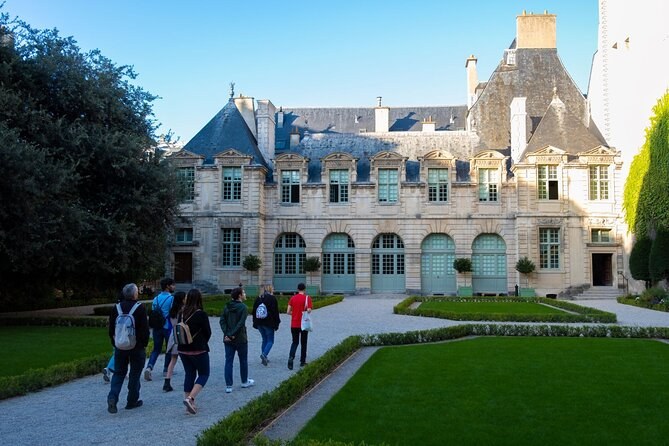
You can see Le Marais without a tour. The streets are public, several of its museums are free, and nobody checks a ticket at any corner. This guide gives you a self-guided route from Saint-Paul metro, tells you what a guide adds, and names the few things that are hard to get right alone.
Do you need a guide in the Marais?
No. People who search for Le Marais tours and tickets often expect a gate, and there is none. The Marais is a district of public streets in the 3rd and 4th arrondissements, open at every hour. You walk in from the Rue de Rivoli or the Rue Saint-Antoine, and you are there.
No walk here opens a door you could not open yourself. The history walks pass the museums from outside, and the Babylon walks say they do not enter any synagogue, because security rules restrict access. What you buy with a guide is the story, the order and, on a food walk, somebody else doing the choosing.
That makes the decision simple. If you like reading as you go, walk alone. If you want someone to tell you why a courtyard matters while you stand in it, book a walk.
A self-guided route from Saint-Paul
This route runs south to north and passes most of what the walks show you. It takes a morning at an easy pace, longer if you go into the museums.
- Saint-Paul metro, line 1. Come up on the Rue Saint-Antoine. Four tour operators meet close to this exit, so you are on the right street.
- The Hôtel de Sully, 62 rue Saint-Antoine. Its courtyard and garden open daily from 9:00 to 19:00, free. Cross the garden to the royal square.
- The Place des Vosges. Built between 1605 and 1612, 36 pavilions round a garden. Walk the arcades once, then sit in the Square Louis XIII.
- The Maison de Victor Hugo, number 6. Permanent collections free, closed Monday.
- The Carnavalet, 23 rue Madame de Sévigné. The history of Paris, permanent collections free, closed Monday.
- The Rue des Rosiers. The heart of the old Jewish quarter, with falafel counters at numbers 23, 26, 34 and 52.
- The Jardin des Rosiers, 10 rue des Rosiers. A garden in two sections, with a second entrance on the Rue des Francs-Bourgeois.
- The synagogue on the Rue Pavée. Hector Guimard's Art Nouveau front of 1913, seen from the street.
- The Mémorial de la Shoah, 17 rue Geoffroy l'Asnier. Free, closed Saturday.
From the Rue des Rosiers you can also head north instead: the Musée Picasso on the Rue de Thorigny, then the Marché des Enfants Rouges at 39 rue de Bretagne, then the Square du Temple. The map of the meeting points marks every stop.
What is in the northern Marais?
The Haut-Marais, north of the Rue des Francs-Bourgeois, has fewer walks and more shops. You reach it from the Rue des Rosiers by heading up the Rue Vieille du Temple, or from Filles du Calvaire metro on line 8.
Three stops make the detour worth it. The Musée Picasso, at 5 rue de Thorigny, charges €16 and closes on Monday. The Marché des Enfants Rouges, at 39 rue de Bretagne, dates from 1615 and takes its name from the red uniforms of the orphans of a hospital founded in 1536; it closes on Monday too. The Square du Temple, a little further up the Rue de Bretagne, stands where the Knights Templar had their Paris seat until 1312, and has a play area, a sandbox and a bandstand.
The north is also where you shop. The quarter is one of the city's international tourist zones, so shops may open on Sunday, and the Haut-Marais is busiest then. If you want the streets quiet, come on a weekday morning.
What is free inside?
More than most visitors expect. The permanent collections of the Carnavalet and the Maison de Victor Hugo are free. So is the Mémorial de la Shoah, with no booking. The Hôtel de Sully courtyard and garden, the Square Louis XIII, the Jardin des Rosiers and the Square du Temple cost nothing.
What charges: the Musée Picasso at €16, the mahJ at €13, the Hôtel de Sully interiors at €13 on special visits only, and the temporary exhibitions at the Maison de Victor Hugo. The Picasso is free on the first Sunday of the month and for under-18s, and the mahJ is free for under-18s.
Self-guided or guided: what is the trade-off?
Here is the choice on six points, from the listings and the museums' own pages.
| On your own | With a guide | |
|---|---|---|
| Cost | Nothing but the museums you choose | $50 to $174 a person, shared |
| The story | What you read as you go | Told in the street, with questions answered |
| Food | You choose every stop | Chosen and paid for on a food walk |
| Pace | Yours | The group's, for 1.5 to 4 hours |
| Doors opened | Every public one | The same ones |
| Timing | Any hour, any day | Set start times; a meeting point to find |
The honest summary: a guide saves you reading and choosing, and adds company. It does not add access.
What does a guide add?
Three things. First, the story in the right order: why the square was built, who lived in the townhouses, and how the Jewish quarter grew around the Rue des Rosiers. Second, the things you would walk past, like a courtyard behind a carriage door or a sign on a shopfront. Third, on a food walk, the tasting itself: the guide picks the bakery, the cheese shop and the falafel counter, and the fare pays for what you eat.
A good guide also answers the questions a book cannot. The four-hour Jewish history walk gives the whole morning to one subject, which is hard to match alone. The Le Marais walking tours set out the differences between the history walks.
Can you eat well without a food tour?
Easily. The falafel counters line the Rue des Rosiers, and the four-hour Jewish history walk prices its falafel lunch at €15 to €25, which is a fair guide to a street lunch. The Marché des Enfants Rouges, founded in 1615 and the oldest covered market in Paris, has food stalls, and it closes on Monday.
What a food walk adds is the spread. The Secret Food Tours walk gives you a croissant, a croque-monsieur, cheese, falafel, a macaron and chocolate, with wine, for $104. Alone, you would stop at three places, not eight. If that spread is the point, book a walk from the Le Marais food tours.
Where do self-guided visitors go wrong?
- Monday. The Carnavalet, the Maison de Victor Hugo, the Musée Picasso, the mahJ and the Enfants Rouges all close. The streets and the Mémorial stay open.
- Saturday. The Mémorial de la Shoah closes.
- The Pompidou. It closed on 22 September 2025 for works and reopens in 2030. You can see the building from outside; you cannot go in.
- The Hôtel de Sully. The courtyard and garden are free; the rooms inside open only on special visits.
- Two Rosiers. The Rue des Rosiers is the street; the Jardin des Rosiers is the garden off it. Arrange to meet at one, not "the Rosiers".
When is a tour worth it?
When you have one morning and a first visit, a two-hour history walk saves you an evening of reading. When the Jewish history of the quarter is why you came, the four-hour walk goes deeper than any plaque. When you want to taste ten things without choosing any of them, a food walk does it for you.
And when you would simply like company. A small group of eight or ten, a guide and three hours of questions is a good morning in any city. The Babylon walk costs $64, and the shortest history walk $50.
Frequently asked questions
Do you need a ticket to visit Le Marais Paris?
Where should a self-guided walk start?
How much does lunch cost in the Marais?
Are the museums in the Marais free?
Can I go inside a synagogue on a tour?
Is the Centre Pompidou open?
Tours for the parts that are hard alone

Le Marais/Paris - The Historic, Trendy, Jewish, LGBT district
Ninety minutes to two hours from the Jesuit church on the Rue Saint-Antoine, through the royal square and the Jewish quarter. The shortest guided introduction to the district, ten people at most.
From $50 per person
Check Availability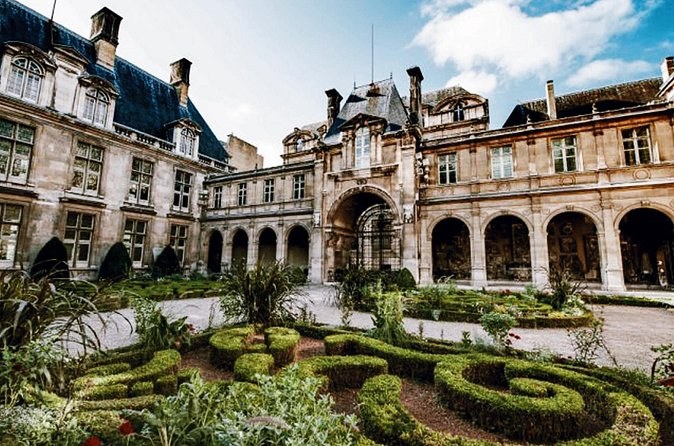
Marais District and Jewish Quarter Guided Walking Tour 12ppl Max
Two and a half hours on foot from Saint-Paul, eleven stops from the Jesuit church to city hall, and the Jewish quarter from the street. No food, twelve people at most, rain or shine.
From $64 per person
Check Availability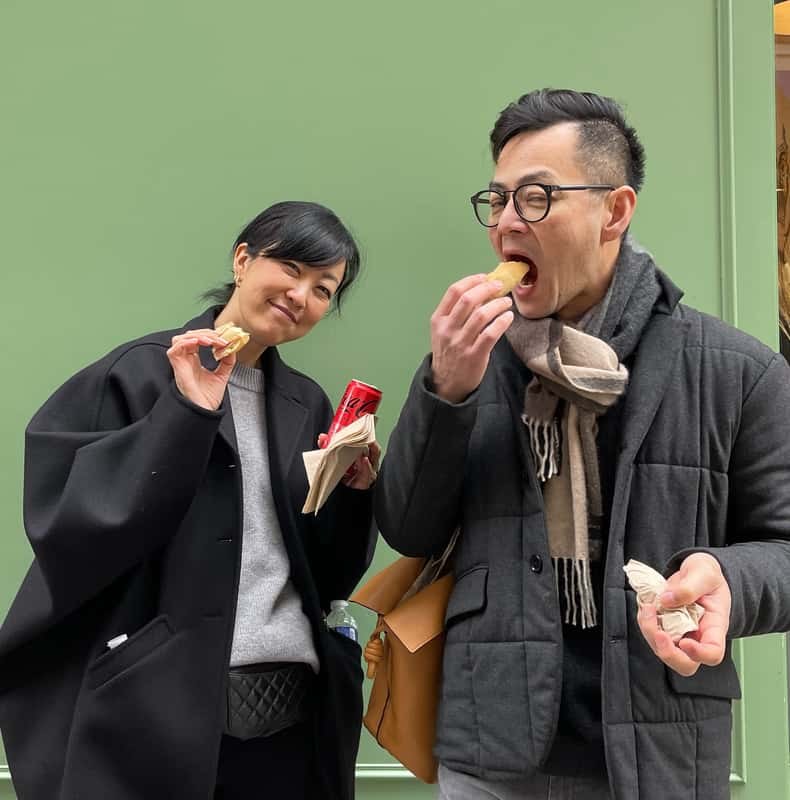
Paris: Le Marais Guided Food Tour with Tastings
Three hours of tastings around the streets of the old Jewish quarter, meeting outside a patisserie there. Ten people at most, and you start where the falafel counters are.
From $79 per person
Check AvailabilityNext: If you decide on a guide after all, start with choosing a Le Marais tour. Every fare sits side by side on Le Marais Paris Tours.