Le Marais Paris Street by Street, From Saint-Antoine to Bretagne
The short answer. Walk it south to north. Start on the Rue Saint-Antoine at Saint-Paul metro, cut through the Hôtel de Sully into the Place des Vosges, then take the Rue des Francs-Bourgeois west, the Rue des Rosiers through the Jewish quarter, and finish at the covered market on the Rue de Bretagne. Allow three hours without stops and a day with them.
How the quarter is laid out
Le Marais covers 126 hectares, about 1.2 per cent of Paris, split between the 4th arrondissement in the south and the 3rd in the north. Most of it is a grid of narrow streets laid down long before cars, lined with the townhouses the aristocracy built in the 17th century. Those townhouses are called hôtels particuliers, and "hôtel" here means a private mansion, not a place to sleep.
The south, around Saint-Paul and the Place des Vosges, is where the famous sights cluster. The north, the Haut-Marais, is quieter, with the market, the museums and the streets where the old wholesalers worked. This guide walks the six streets that hold the quarter together, and says what each one is for. If you would rather walk them with somebody who knows the doors, start with guided tours of Le Marais.
| Street | What it is for | Time to give it |
|---|---|---|
| Rue Saint-Antoine and Rue François Miron | The metro, the Jesuit church, the medieval houses | 20 minutes |
| Hôtel de Sully and the Place des Vosges | The courtyard passage and the royal square | 45 minutes |
| Rue des Francs-Bourgeois | The shopping street, open on Sundays | 30 minutes |
| Rue des Rosiers and Rue Pavée | The Jewish quarter, the falafel, the Guimard front | 45 minutes |
| Rue de Sévigné, Rue de Thorigny, Rue du Temple | The museum streets | A museum each |
| Rue de Bretagne | The covered market and the square | 45 minutes |
Rue Saint-Antoine and the Rue François Miron
You come up from Saint-Paul metro onto the Rue Saint-Antoine, a wide, busy road. Across it stands the church of Saint-Paul Saint-Louis, built by the Jesuits in the 17th century, and it is free to step inside. A few minutes west, at number 11 on the Rue François Miron, the food walks point out two houses they count among the oldest in Paris.
Do not miss the merry-go-round by the metro exit. It is not a monument, but it is where the most-reviewed food walk in the quarter meets, and you will see the orange umbrella if you pass mid-morning. Give the street twenty minutes, most of it looking up.
The Hôtel de Sully and the Place des Vosges
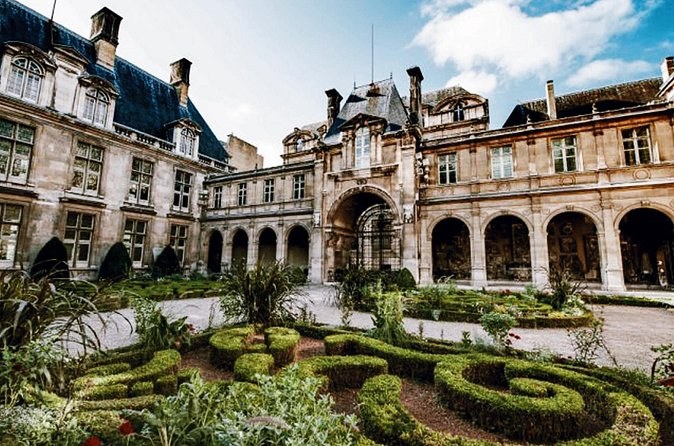
At 62 Rue Saint-Antoine an archway leads into the courtyard of the Hôtel de Sully, now the headquarters of the Centre des monuments nationaux. The courtyard and garden are free and open daily, and at the back of the garden a passage lets you out into the Place des Vosges. It is the best entrance to the square there is.
The square itself was built between 1605 and 1612 on the orders of Henri IV and inaugurated in April 1612 for a double royal engagement. It was first called the Place Royale. Its 36 pavilions of red brick and pale stone stand over a continuous arcade, and it is the oldest planned square in Paris. Victor Hugo lived at number 6, now a free museum. In the middle, the Square Louis XIII has lawns, lime trees, a play area and toilets.
Rue des Francs-Bourgeois
From the northwest corner of the square, the Rue des Francs-Bourgeois runs west through the middle of the quarter. It is the shopping street: clothes, homeware, perfume, the chains and the independents side by side. Because the Marais is an international tourist zone, the shops here may open on Sundays, and Sunday afternoon is when the street is at its fullest.
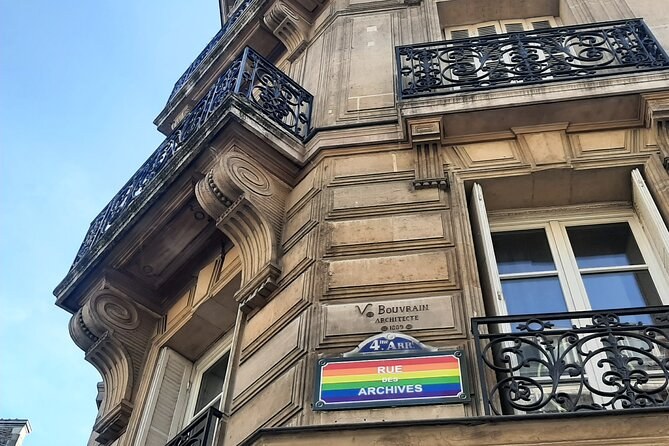
What most people walk past are the doorways. Look through any open carriage gate and you see a townhouse courtyard behind the shopfront. The Musée Carnavalet is a few steps up the Rue de Sévigné, and further west, at number 60, stand the Archives nationales. Give the street half an hour, more if you shop.
The Rue des Rosiers and the Rue Pavée
One block north runs the Rue des Rosiers, the axis of the old Jewish quarter known as the Pletzl, Yiddish for "small square". The street still carries kosher bakeries, delis and falafel counters. L'As du Fallafel is at number 34 and Mi-Va-Mi at 23, and the queues at lunchtime tell you which is in fashion that year. Behind number 10, a gate leads into the Jardin des Rosiers - Joseph-Migneret, a quiet garden that also opens onto the Rue des Francs-Bourgeois.
Turn south down the Rue Pavée and at number 10 you reach the synagogue Hector Guimard designed in 1913, the only Art Nouveau building in the Marais. Its front was damaged in 1941 and it is still an active synagogue, so you see it from the street. The history of the quarter, and what the walks leave out, is on the Jewish quarter page.
The museum streets: Sévigné, Thorigny and Temple
North of the Francs-Bourgeois, three streets hold the quarter's museums. The Musée Carnavalet, the history of Paris, has its entrance at 23 rue Madame de Sévigné, and its permanent collections are free. The Musée Picasso is at 5 rue de Thorigny, in a townhouse of its own, at €16. The mahJ, the museum of Jewish art and history, fills the Hôtel de Saint-Aignan at 71 rue du Temple, at €13.
These are the streets to save for a wet afternoon. All three museums close on Monday, and the free one is the easiest to fit around a walk. Days and prices for each are on the Le Marais museums page.
The Rue de Bretagne and the Enfants Rouges
The walk ends at the top of the quarter on the Rue de Bretagne. At number 39 is the Marché des Enfants Rouges, founded in 1615 and the oldest covered food market in Paris. Its name comes from the red uniforms of the children of an orphanage founded in 1536 by Marguerite de Navarre. It closes on Mondays, so come another day and come hungry.
At 64 rue de Bretagne, the Square du Temple has a play area, a bandstand and ponds on the site where the Knights Templar had their Paris seat. The food walk that starts on this street meets at number 40, by the market. Filles du Calvaire, on line 8, is the metro home.
What most visitors walk past
- The Hôtel de Sully passage: the free way from the Rue Saint-Antoine into the square, through a courtyard and a garden.
- The Jardin des Rosiers: a garden behind a gate on a street of falafel queues.
- The Rue Pavée front: Guimard's synagogue, one street off the crowds.
- The carriage gates: on any street, an open door means a courtyard behind it.
- The Square du Temple: the Templars' ground, now the quarter's family garden.
Photographs, and the route to take
The Place des Vosges photographs best in the morning, before the arcades fill and while the light is low across the brick. The Rue des Rosiers is a lunchtime picture, when the queues are the story. Many courtyards belong to private buildings, so if a door is open, photograph from the threshold unless a sign invites you in.
The route is the one this guide follows: Saint-Paul, the Hôtel de Sully, the square, the Francs-Bourgeois, the Rosiers, and north to the market. It is flat all the way, and it never doubles back. If you would like a guide to explain the townhouses as you go, the Jewish quarter history walk covers most of this route in two and a half hours, from $64. Every guided walk is on Le Marais walking tours, and the plan for a first day is in the guide to visiting.
Walks that follow these streets
Marais District and Jewish Quarter Guided Walking Tour 12ppl Max
Two and a half hours on foot from Saint-Paul, eleven stops from the Jesuit church to city hall, and the Jewish quarter from the street. No food, twelve people at most, rain or shine.
From $64 per person
Check Availability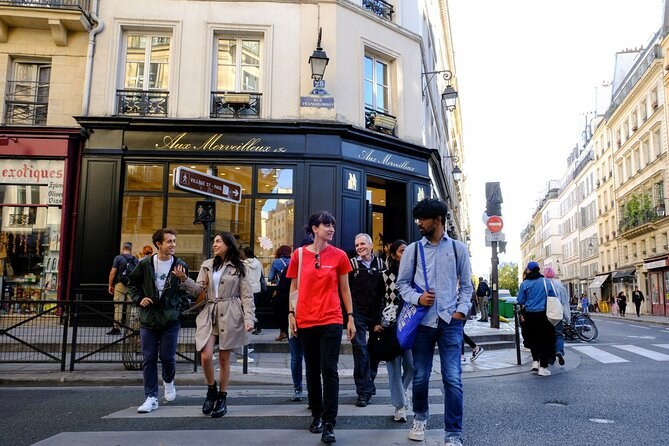
Le Marais Walking Tour: Hidden Stories, History & Local Life
Two hours and about 2 km from the Pompidou's plaza to the Place de la Bastille, through courtyards most visitors walk past. One pastry from a local bakery, and vegetarian options.
From $60 per person
Check Availability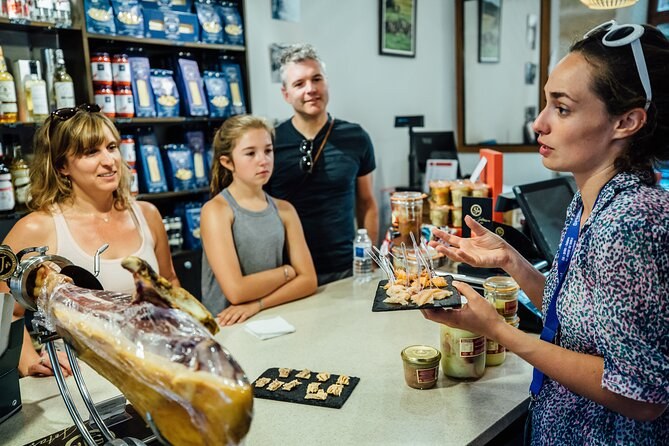
Paris Le Marais District Original Food and Wine Tasting Tour
Three and a half hours from the covered market on the Rue de Bretagne down to the Rue de Rivoli, with cheese, chocolate and wine. Cancel at least three days ahead for a refund.
From $152 per person
Check AvailabilityNext: Read what these streets hold in the facts behind the quarter. Every fare sits side by side on Le Marais Paris Tours.