How to Visit Le Marais Paris: No Gate, the Metro and the Museum Days
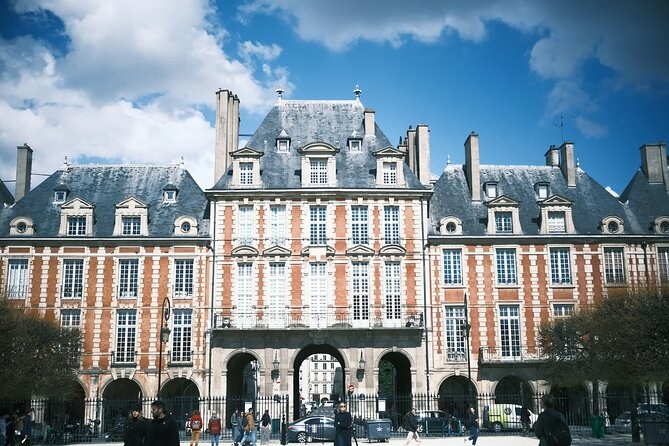
The short answer. Nobody sells a ticket to Le Marais. It is a district of public streets in the 3rd and 4th arrondissements, open at every hour, and walking in costs nothing. Most of its museums close on Monday, the Mémorial de la Shoah closes on Saturday, and the shops open on Sunday. What you book is a guide: history walks start at $50 and food walks at $37 a person.
Quick facts
- Where: the Right Bank of central Paris, 3rd and 4th arrondissements; the Place des Vosges, 75004, is its center of gravity.
- Price: nothing to enter. You pay for a tour fare or for a paid museum.
- Hours: none. The streets are public; museums and gardens keep their own.
- Closed days: Monday for most museums, Saturday for the Mémorial de la Shoah.
- Metro: Saint-Paul on line 1 for the south; Filles du Calvaire on line 8 for the north.
What you pay for, and what you do not
Searching for Le Marais tours and tickets turns up a strange mix, because there is no entrance to sell. Le Marais is a neighborhood, not a monument. You walk in from the Rue de Rivoli or the Rue Saint-Antoine and you are there. So the money you spend here goes on two things: a guide who knows which courtyard doors are open, and the museums that charge.
Some of the best museums in the quarter charge nothing. The Musée Carnavalet, the history of Paris in two townhouses, keeps its permanent collections free. So does the Maison de Victor Hugo at number 6 on the Place des Vosges. The Mémorial de la Shoah is free as well. The two that charge are the Musée Picasso and the mahJ, the museum of Jewish art and history. The full list, with each museum's own days, is on the Le Marais museums page.
Museum prices and days
| Museum | Admission | Open | Closed |
|---|---|---|---|
| Musée Carnavalet | Free (permanent collections) | Tue–Sun 10:00–18:00 | Monday |
| Maison de Victor Hugo | Free (permanent collections) | Tue–Sun 10:00–18:00 | Monday |
| Mémorial de la Shoah | Free | 10:00–18:00, Thursday to 21:00 | Saturday |
| Musée Picasso | €16; free 1st Sunday and under 18 | Tue–Sun 9:30–18:00 | Monday |
| mahJ | €13; free under 18 | Tue–Fri 11:00–18:00, Sat–Sun 10:00–19:00 | Monday |
| Centre Pompidou | — | Closed for works | Until 2030 |
These are each museum's own figures, as of September 2026; check them the week you travel. The Musée Picasso is also free for EU residents under 26, and the mahJ is free on the first Saturday of the month from October to June. Temporary exhibitions at Victor Hugo's house carry a ticket, at €11 full or €9 reduced.
Getting there by metro
You will almost certainly arrive by metro, and the line you take decides which end of the quarter you start in. Line 1 runs east to west through the center of the city. Its stations at Hôtel de Ville, Saint-Paul and Bastille put you at the southern edge.
- Line 1: Saint-Paul, Hôtel de Ville and Bastille, for the south.
- Line 11: Hôtel de Ville, Rambuteau and Arts et Métiers, for the west.
- Line 8: Filles du Calvaire, for the Rue de Bretagne and the covered market.
- Line 7: Pont Marie, for the Ile Saint-Louis and the river.
- Line 5: Bréguet-Sabin and Bastille, for the eastern edge.
Saint-Paul metro is the one to know. Four operators meet there, at four different spots: by the merry-go-round, at a bakery door, at the Rue du Prévôt exit and at the church. Read your confirmation, not a search result, and check the street name. Every meeting point is marked on the Le Marais meeting-point map.
Walking it: the ground, the steps and the bags
The Marais is flat, which is rare for a Paris quarter people walk for hours. There is no hill to climb. What slows you down is the pavement: narrow sidewalks, old doorsteps and cobbled courtyards. Wear shoes with grip, especially after rain.
Several walks are listed as stroller accessible, the Babylon history walk and the Do Eat Better meal among them. Few are wheelchair accessible, and the ones that are say so. Leave large bags and suitcases at your hotel: the Babylon walks do not allow them. Pets do not come on the Secret Food Tours walks.
How long to allow
- Ninety minutes: a guided introduction from the church on the Rue Saint-Antoine, and nothing else.
- Half a day: a two-and-a-half-hour history walk, then lunch on the Rue des Rosiers.
- A full day: a history walk in the morning, a free museum after lunch, and a food walk or the market in the late afternoon.
- Two days: the history on one, the food on the other, and the Musée Picasso in between.
Most food walks run three to three and a half hours. Treat one as your lunch rather than a snack before it, and do not book a restaurant straight after.
The best day of the week
The days decide more than the months here. On Monday the Carnavalet, Victor Hugo's house, the Musée Picasso and the mahJ are all closed. On Saturday the Mémorial de la Shoah closes, and the Rue des Rosiers keeps the Sabbath. On Sunday the shops open, because the Marais is one of the city's international tourist zones, and the crowds come with them.
So the best day is a Tuesday to Friday, and the best time is the morning, when the courtyards are quiet. The Marché des Enfants Rouges closes on Mondays too. Month by month, the difference is mostly weather: Paris gets 634.3 mm of rain a year across about 109 days, and the walks run in all of it. The detail is on the when-to-visit page and the Le Marais weather page.
Choosing a tour
The tours here fall into a handful of kinds, and the fare tells you what you are buying. History walks feed you nothing and cost $50 to $117. Shared food walks cost $37 to $174, and the cheapest of them is two hours with three small tastings and no drinks. Private food walks run $222 to $274 a person. Bike rides include the Marais as part of a longer day.
The most-reviewed walk in the quarter is the tastings walk from Saint-Paul, at $104. If you would rather sit down to lunch, the full-meal walk from the Ile Saint-Louis costs the same. For the history alone, the Jewish quarter walk costs $64. The whole food range is on Le Marais food tours; the history walks are on Le Marais walking tours.
What to combine it with
The Ile Saint-Louis sits just across the Pont Marie, and the full-meal walk begins there. The Hôtel de Ville is on the western edge. From the Place des Vosges, the Place de la Bastille is just to the east. None of them needs a taxi, and all of them fit the same day.
If you are also deciding where to sleep, the quarter's own streets are the answer for anyone booking an early walk. The trade-offs between the 3rd and the 4th are on the where-to-stay page, and the rest of the practical questions are on the Le Marais FAQs.
Ways to start a first visit
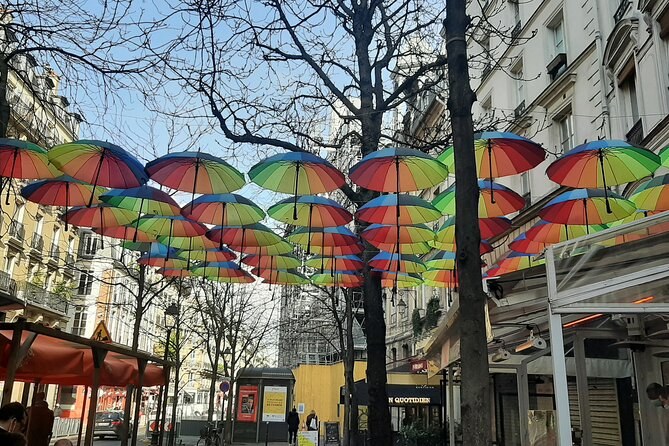
Le Marais/Paris - The Historic, Trendy, Jewish, LGBT district
Ninety minutes to two hours from the Jesuit church on the Rue Saint-Antoine, through the royal square and the Jewish quarter. The shortest guided introduction to the district, ten people at most.
From $50 per person
Check Availability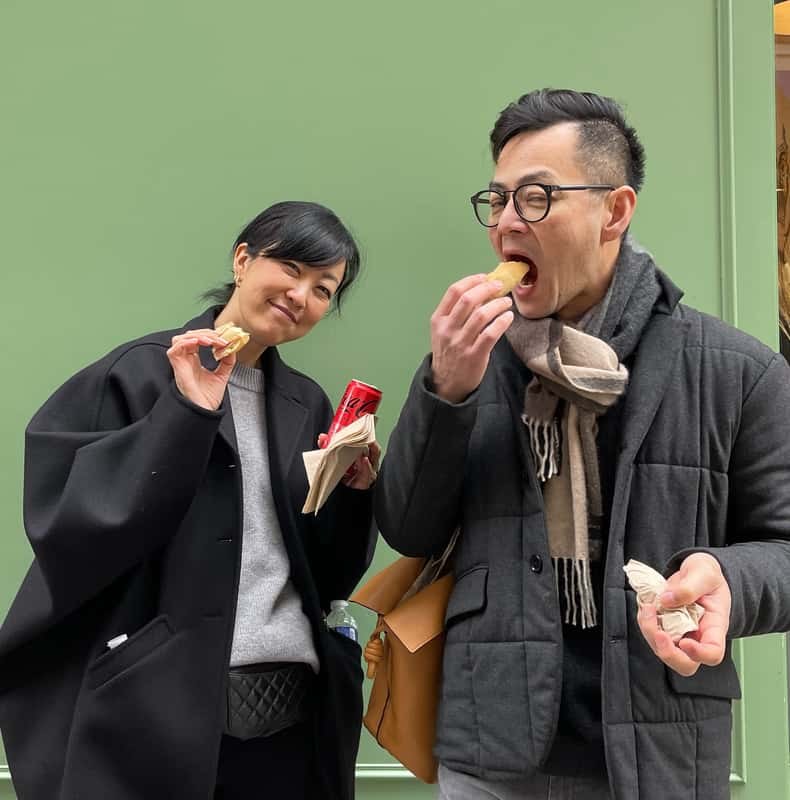
Paris: Le Marais Guided Food Tour with Tastings
Three hours of tastings around the streets of the old Jewish quarter, meeting outside a patisserie there. Ten people at most, and you start where the falafel counters are.
From $79 per person
Check Availability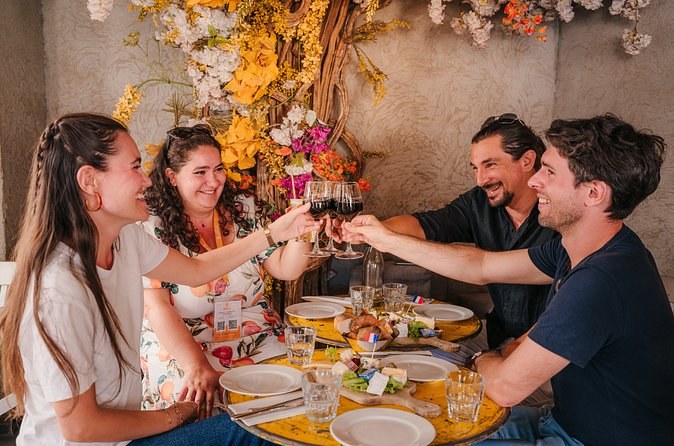
Paris Le Marais Food Tour – Full French Meal by Do Eat Better
Three and a half hours from the tip of the Ile Saint-Louis to the royal square, eating a full French meal across at least four stops, with a seated main course and at least one glass of wine.
From $104 per person
Check AvailabilityNext: Walk it street by street in the guide from Saint-Antoine to Bretagne. Every fare sits side by side on Le Marais Paris Tours.